
WHAT IS FEED COMPETITION? USING BY-PRODUCTS CONTRIBUTES TO REDUCING COMPETITION FOR FEED.
Competition for feed
The tensions and trade-offs between the use of edible crops and other resources to feed humans directly or to feed livestock.
Using by-products contributes to reducing competition for feed.
In response to the problems of “feed competition,” some researchers have proposed an approach to food production that minimizes competition for feed without eliminating the livestock industry altogether.
In this approach, inspired by the use of traditional animal feeds sometimes referred to as “food waste farming”, livestock would only eat foods that humans would not eat, such as grass, food waste, biomass from biofuel production and other industrial by-products – thus recycling inedible biomass streams into the food system.
Scientists also conducted experiments to see if livestock would be affected by changing their diets to include these by-products, or if these by-products would have any impact on livestock productivity and quality.
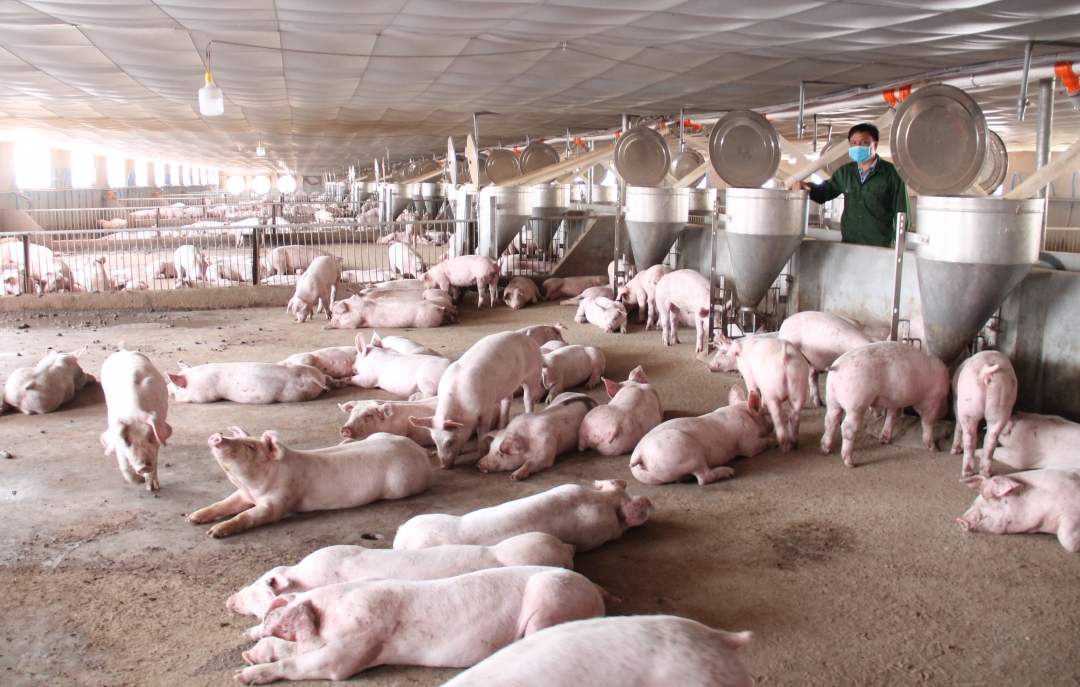
According to Kowalski et al., the study on “Effect of breed type and by-product diet on performance and meat quality in growing and finishing pigs” showed that “Different pig breeds can adapt well to diets with low competition for feed-by-products”.
Methods:
Two types of Piétrain boars were used. HFI (high feed intake) and LFI (low feed intake)
A total of 192 pigs (48 pigs/boar type/diet)
When they were 14 weeks old, they were fed with two different diets.
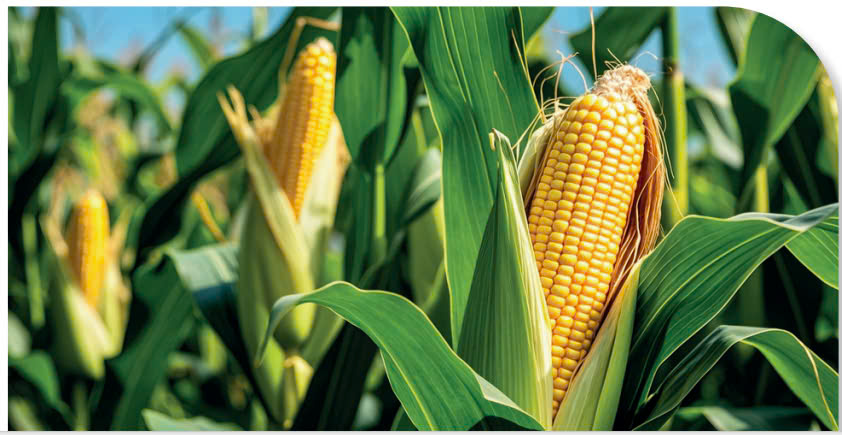
Control diet: mainly cereals: corn, wheat, barley, soybean meal
Test diet: mainly by-products rich in fat and fiber. Formulated with the same net energy, crude protein and digestible aa levels without any added grains and soybean meal.
Monitoring parameters:
Productivity, digestibility, carcass, feed conversion, meat quality.
Results:
There were no significant differences (P > 0.05) between boar type (HFI and LFI) and diets, indicating that switching to a diet with less feed competition is equally feasible in different types of pigs.
Boar type affected productivity, carcass quality and muscle fat content. HFI pigs showed higher daily feed intake (DFI) and daily gain (P < 0.001), and higher muscle fat content (P = 0.030). Lower carcass quality (P < 0.001). No significant difference in feed conversion ratio (FCR) (P = 0.205)
For both types of boars, pigs fed the control diet performed better, with higher daily gain (P = 0.028), DFI (P = 0.011) and meat yield (P = 0.009) and better digestibility (P < 0.001), but no difference in feed conversion ratio or meat quality.
Overall, only a few studies have investigated the effects of feed composition on meat quality and sensory characteristics (Li et al., 2021). In this study, the impact of both types of selected boars differing in feed intake and diet composition on meat quality was very limited despite large differences in phenotype and diet type.
In summary, there is no indication that pigs with different feed intake capacities will adapt differently to by-product diets (high fat, high fibre). Different types of pigs may adapt well to diets with less competition for feed.
Conclusions:
Boar type influences animal performance and fatness, while diet affects nutrient digestibility and carcass yield, with limited impact on growth performance. Meat quality is only slightly influenced by boar type but not by diet type.
Thus, the use of by-products in feed formulations to reduce competition for food with humans is very feasible. Similar studies help people have a more comprehensive view and move towards sustainable development.